

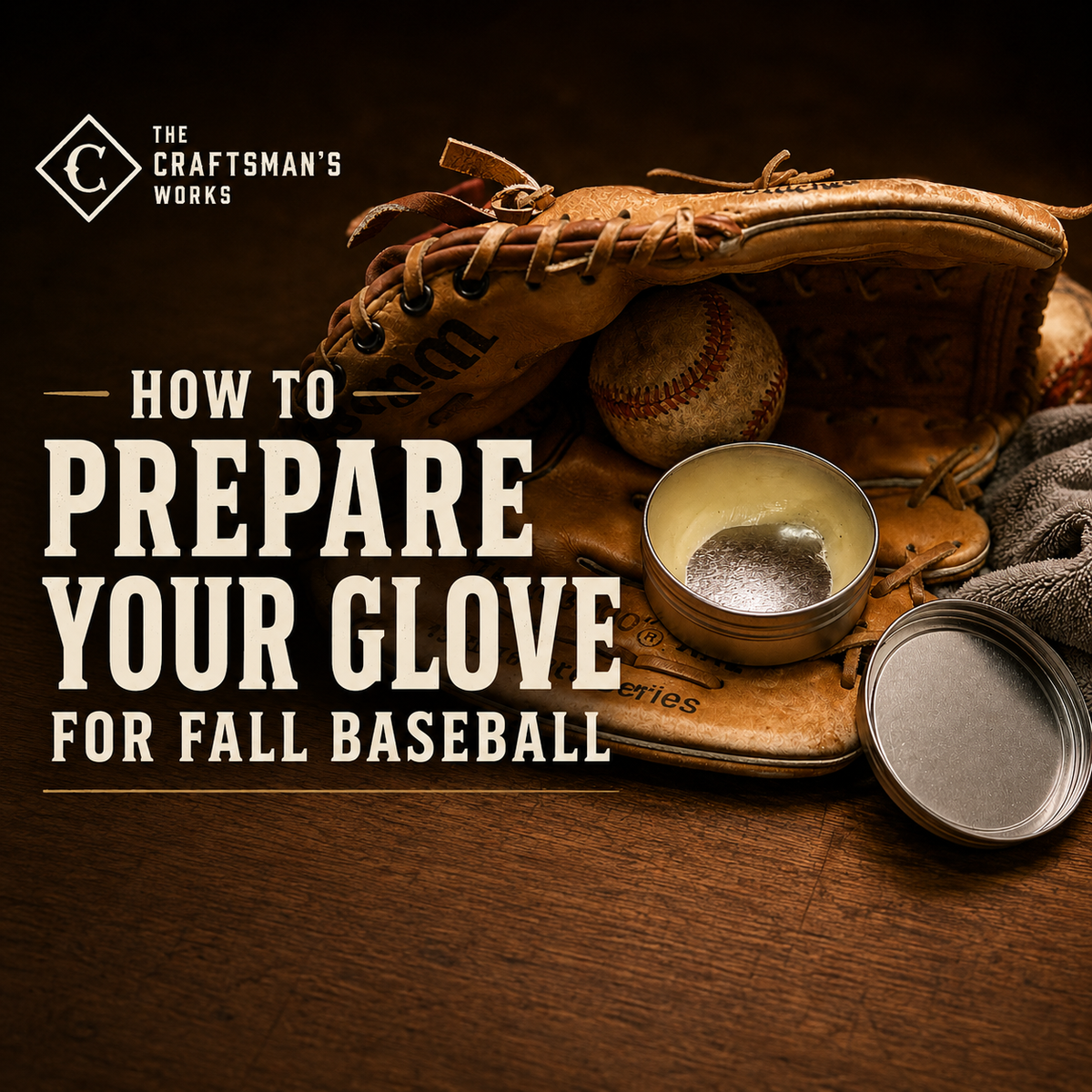
How to Prepare Your Baseball Glove for Fall Baseball
Quick Overview:
How should you prepare a baseball glove for fall baseball?
Clean away dirt and buildup, allow the baseball glove to dry completely, apply a light coat of Glove Lotion and let it absorb, then finish with a thin application of Glove Salve. During the season, regularly wipe dirt from the glove and use Leather Spot Cleaner when needed.
Fall baseball is almost here.
After a summer of tournaments, camps, travel, or maybe a few months sitting on a shelf, your baseball glove deserves a little attention before you head back onto the field. The beginning of fall baseball is a perfect time to inspect your glove, clean it up, and give the leather what it needs for another season.
You don't need to completely recondition a baseball glove every time a new season starts. In fact, too much conditioner can be just as problematic as not conditioning it at all. A little preventative maintenance goes a long way.
Here’s a simple routine to get your baseball or softball glove ready for fall.
Step 1: Inspect Your Glove
Before applying anything, take a few minutes to look over your glove.
Check the:
-
Laces for cracking, stretching, or fraying
-
Web for loose or damaged laces
-
Palm and pocket for excessive dryness
-
Finger stalls and lining for damage
-
Heel and hinge areas for cracking
-
Overall shape of the glove
Pay particular attention to the laces around the web, fingers, and heal. A lace that looks questionable in August has a way of breaking at the worst possible time in September.
If something needs to be repaired or relaced, before the season begins is the time to do it.
Step 2: Clean Off the Summer
Even when a glove doesn't look particularly dirty, it can accumulate dust, dirt, sweat, and grime throughout the season.
Start by wiping away loose dirt with a clean rag.
For dirt that won't simply wipe away, use Leather Spot Cleaner and a clean rag to gently clean the affected areas. Pay attention to the palm, pocket, fingers, and areas where dirt tends to collect around the laces.
You don't necessarily need to deep-clean the entire baseball glove. The goal is to remove the dirt and buildup that shouldn't be sitting on the leather.
Once you're finished, let the glove dry naturally in the open air before applying any conditioner.
Never use artificial heat to speed things up.
Step 3: Give It a Light Conditioning with Glove Lotion
Once the glove is clean and completely dry, evaluate the leather.
If it feels dry after a long summer, a light application of Glove Lotion can help replenish the leather before fall baseball begins.
The key word is light.
Your glove doesn't need to be saturated. Apply a small amount of Glove Lotion and work it evenly into the leather. You can always add a little more if an especially dry area needs it.
Pay particular attention to areas that flex repeatedly during play, including the palm, pocket, heel, thumb, and pinky.
The goal isn't to make the glove softer. It's to keep healthy leather healthy.
Step 4: Let the Glove Lotion Absorb
Don't immediately put another product over the Glove Lotion.
Give it time to work.
Place the glove somewhere indoors with good airflow and leave it in the open rather than putting it back into your baseball bag. Allow the lotion to absorb into the leather naturally.
This is also a good opportunity to make sure the glove is sitting in the shape you want it to maintain.
Once the lotion has absorbed and the leather no longer feels damp from conditioning, you're ready for the final step.
Step 5: Finish with Glove Salve
After conditioning, apply a light coat of Glove Salve.
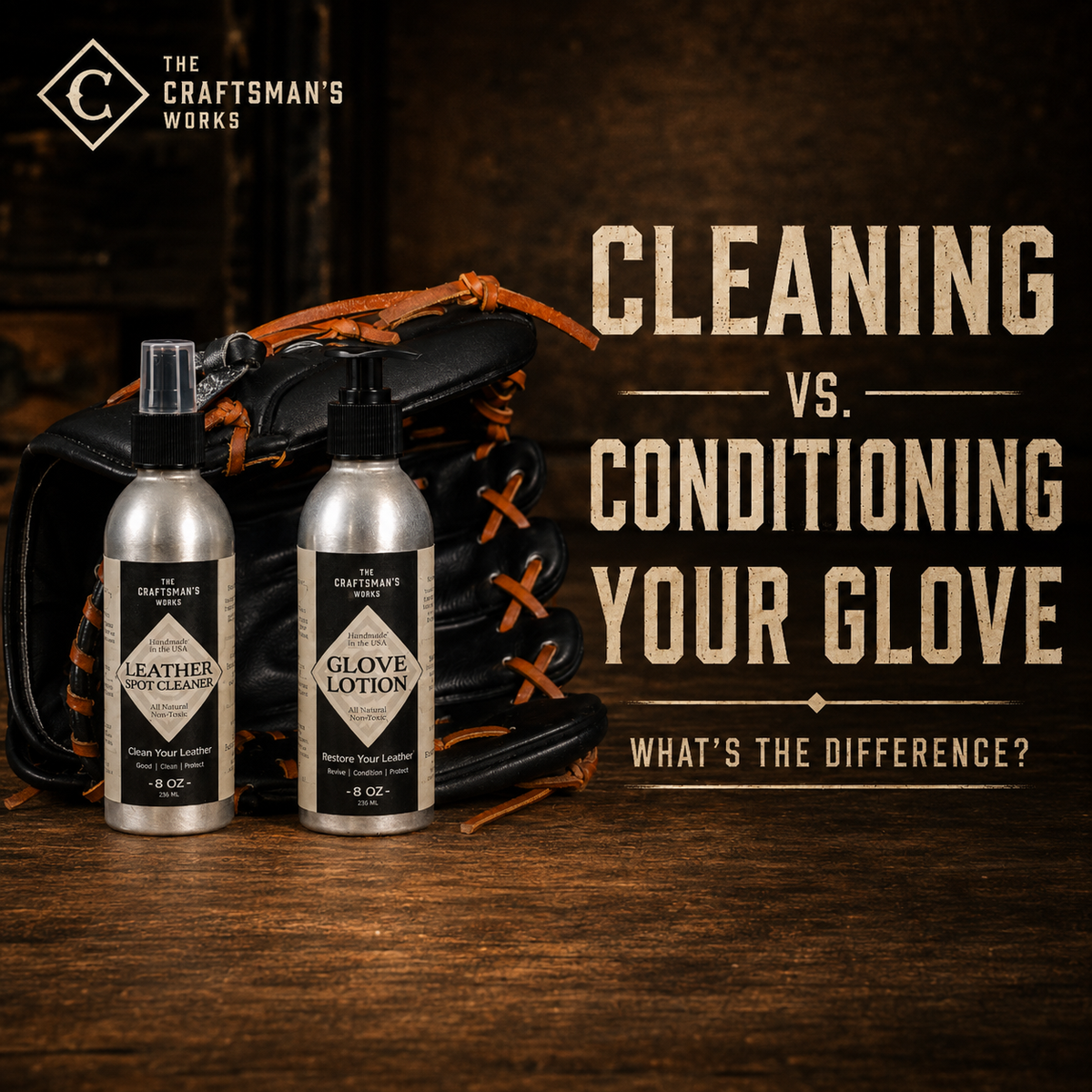
Glove Lotion and Glove Salve serve different purposes in this routine.
Think of the Glove Lotion as the product that helps replenish and condition the leather, while Glove Salve provides the finishing layer that helps condition and protect the leather as you head into the season.
Again, you don't need a heavy application.
Work a thin layer into the glove, paying particular attention to the pocket, palm, fingers, and other exposed leather.
Once finished, allow the glove to sit before putting it back into your bag.
Now it's ready for fall baseball.
Keep Your Glove Clean Throughout the Fall
Preparing your glove shouldn't be the last time you think about baseball glove care until the season ends.
One of the easiest things players and parents can do is simply keep the baseball glove clean throughout the season.
You don't need to condition your glove after every game. You don't need to apply Glove Salve every week.
But you should pay attention to dirt.
Keep a clean rag handy and wipe dirt, dust, and field debris from the glove regularly. When necessary, use a small amount of Leather Spot Cleaner to address dirty areas before grime has a chance to build up.
This is especially important after playing on dusty fields, wet dirt, or muddy surfaces.
A few minutes of routine cleaning throughout the season is much easier than trying to undo months of accumulated dirt later.
Don't Over-condition Your Glove
More isn't better when it comes to baseball glove conditioner.
A quality glove should still have structure. Continually adding lotion, oil, or conditioner when the leather doesn't need it can make a glove unnecessarily heavy and overly soft.
Instead, let the leather tell you when it needs attention.
If it feels healthy and flexible, leave it alone.
If it begins feeling noticeably dry, give it a light conditioning.
Glove care should be preventative maintenance—not a constant attempt to make the leather softer.
A Simple Fall Baseball Glove Care Routine
Getting ready for fall baseball doesn't require an afternoon of work.
Remember this simple routine:
Inspect → Clean → Condition → Protect
Inspect your glove and laces.
Clean dirt and buildup with Leather Spot Cleaner.
Apply a light coat of Glove Lotion when the leather needs conditioning and give it time to absorb.
Finish with Glove Salve to condition and help protect the leather as the season begins.
Then keep a rag handy and clean the glove throughout the season.
That's it.
Take Care of the Glove You Trust
Fall baseball brings cooler evenings, dusty fields, doubleheaders, practices, and another few months of throwing a ball into the same pocket over and over again.
Your glove is going to take some abuse.
Giving it a little attention before the first practice—and keeping it clean throughout the season—can help preserve the leather, maintain the shape you've worked so hard to create, and extend the life of the glove.
A good glove shouldn't just make it through this fall.
Take care of it now, and it may be with you for many falls to come.
FAQs:
Should I condition my baseball glove before fall baseball?
Yes, if the leather feels dry. A light application is usually enough. Avoid over-conditioning a glove that already feels healthy and flexible.
How much glove conditioner should I use?
Use a small amount and apply it evenly. The goal is to replenish dry leather, not saturate or dramatically soften the glove.
Should I clean my glove before conditioning it?
Yes. Dirt and buildup should be removed before applying conditioner so you're conditioning clean leather rather than trapping grime against the surface.
How often should I clean my baseball glove during the season?
Wipe loose dirt away regularly with a clean rag. Use a leather-safe cleaner when dirt and grime begin to build up.
What's the difference between Glove Lotion and Glove Salve?
Glove Lotion is useful for lightly conditioning and replenishing dry leather. Glove Salve can then be used as a finishing treatment to condition and help protect the leather.
Can you over-condition a baseball glove?
Yes. Too much conditioner can make a glove unnecessarily soft, heavy, or cause it to lose structure. Condition when the leather actually needs it.

Leave a comment
This site is protected by hCaptcha and the hCaptcha Privacy Policy and Terms of Service apply.